A plain explanation of CAD-to-quote software for sheet-metal and job shops: what it reads, what it calculates, what it does not do, and how to tell whether a shop needs it.
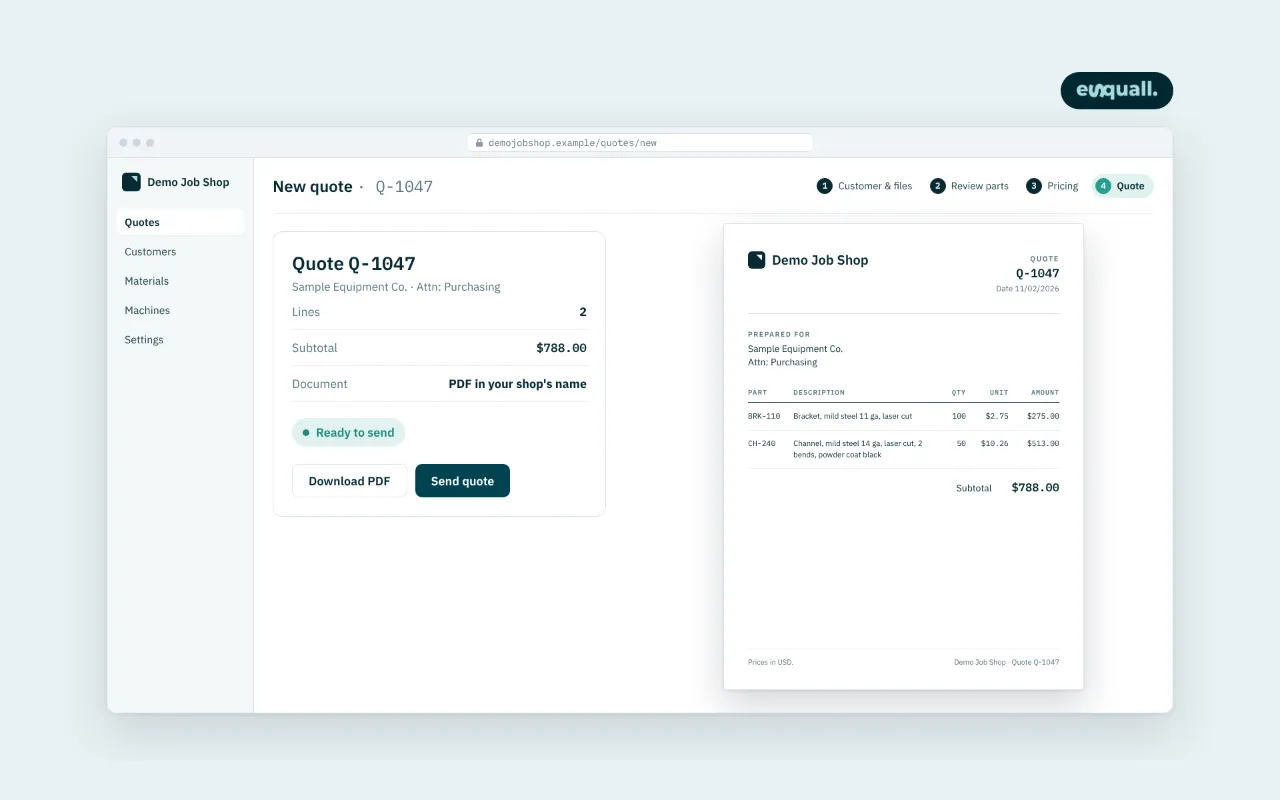
CAD-to-quote software reads a part file, usually a STEP or DXF, works out what it will take to make the part, and turns that into a priced quote using the shop's own rates. The point is to stop re-typing geometry into a spreadsheet and to make every quote come out the same way regardless of who is at the desk.
What it reads
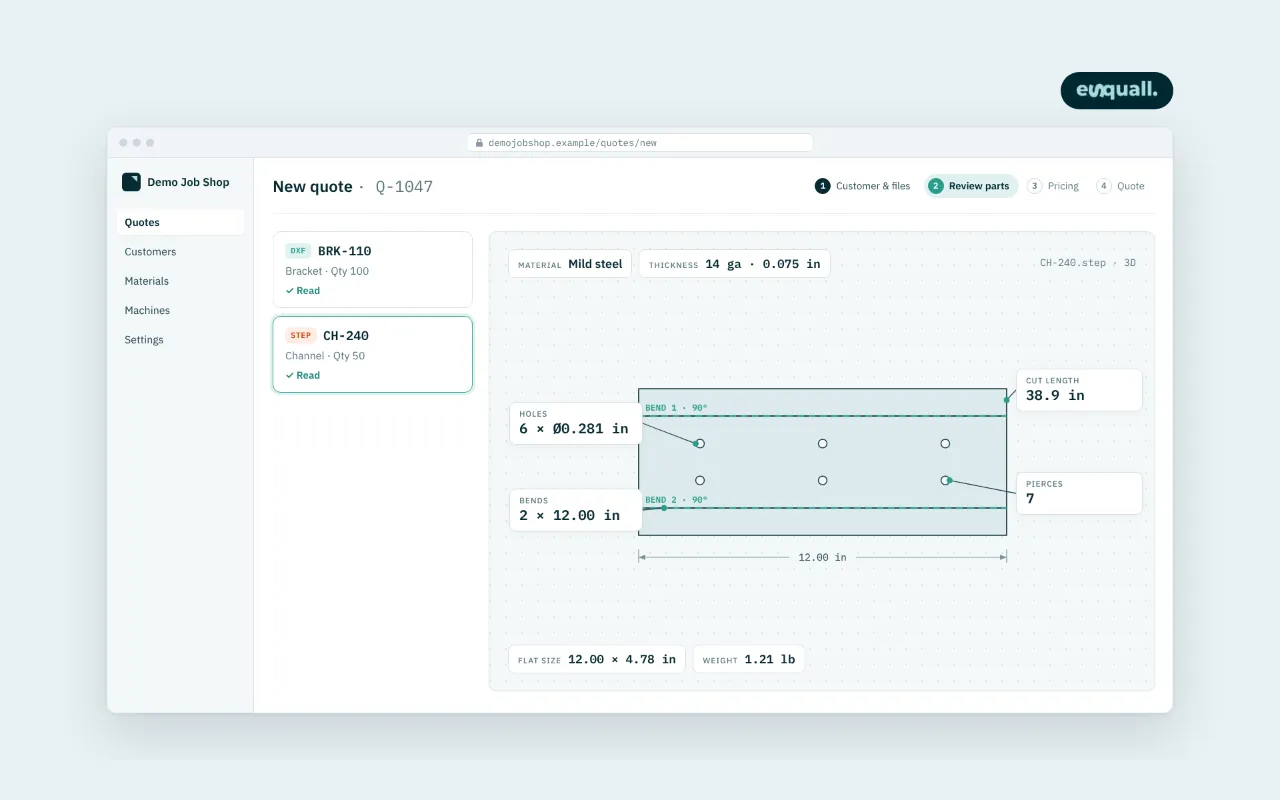
From a DXF flat pattern it measures the total cut length and counts the closed contours that need a pierce. From a STEP file it also finds the bends, the flat-pattern size and the bounding box the part needs on the sheet. It identifies features that cost extra, such as small holes relative to thickness, tight internal corners or very long thin slots. None of this requires a person to measure anything.
What it calculates
Cut time, from cut length and pierce count at the feed rate for that material and thickness. Material cost, from the sheet area the part consumes, including a nesting allowance. Bend time, from bend count and set-ups. Handling, de-burring and any secondary operations the shop has defined. Then it applies the shop's rates and margins and produces a quote with the line items visible, so an estimator can see why the number is what it is and adjust the things that are judgement calls, such as a rush fee.
What it does not do
It does not know your rates; you set them. It does not replace the CAM program that actually drives the machine, and a good one is checked against the CAM run time rather than trying to replace it. It does not decide whether to take the job. It gives the estimator a number they can trust in minutes instead of an hour, and a record of how the number was reached.
Estimating software or quoting software?
People use both names. Estimating is the cost side: what will this part take to make. Quoting is the customer side: what will we charge, in a document the customer can accept. CAD-to-quote software covers both, because the estimate is built from the file and the quote is built from the estimate. If a tool only does one half, the other half is still a spreadsheet.
Who it is for
Job shops and sheet-metal fabricators that quote many different parts, where the quoting queue is the bottleneck, or where quotes from two estimators do not match. Shops that make the same ten parts all year usually do not need it. Shops that answer twenty RFQs a week usually do.
How to judge one
Give it ten parts you have already made and know the real times for. Set your own rates. Compare its estimate with the CAM time and the invoice. The software is worth having if it gets close on all ten and shows you why on the ones it missed.
eSquall builds CAD-to-quote software for shops that cut and bend sheet metal, priced on your own rates and checked against your CAM. Read about it or see the case study.
Umer Farooq, CTO, eSquall
Published on October 29, 2026